Best care for wounds with Nexcare Sensitive Skin

Tiger girl on a swing at the park
Being the only girl with two elder brothers, Tiger girl has grown up loving spending time outdoors at playgrounds. She loves being in the park climbing structures and constantly challenges herself to be able to keep up with her elder brothers.

Tiger girl taking a piggyback ride from Monkey Boy
This girl is quite the daredevil and is not afraid of heights. She gets an adrenaline rush for attempting what may seem to be the near impossible for her age. As a result, she often ends up with grazed hands and knees when she misses her footing and slips and falls. Ouch!!
Even though Tiger girl has quite a high tolerance for pain however sometimes the oozing blood from the wounds get to her and she she ends up bawling due to the pain that she is experiencing.

Tiger girl getting a drink as she walks on the curb
My Experience
As an experience mom of 3, I always carry plasters with me so that I handle boo-boos immediately when they happen.
The boys used to get scraps and cuts very often when they were younger if they fell at the playground or accidentally hit against a playscape. The plasters kept within my wallet get used up very quickly.
I have tried different brands of bandages with the boys. The plasters that we used either stuck too tightly to the skin and made the boys squeal when it was taken off or doesn’t even adhere to the skin.
The experience that I had with 3M Nexcare Sensitive Skin Bandages, Adhesive Pads and Tape had been really eye opening.
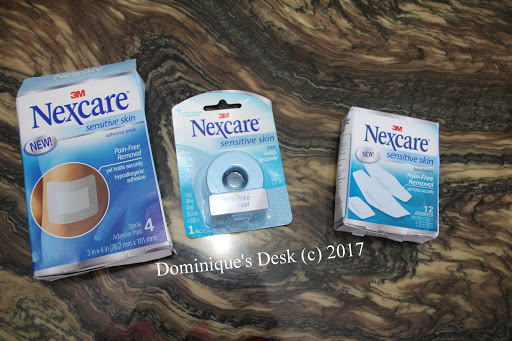
The latest bandages from Nexcare Sensitive Skin Range by 3M are specially crafted and does not cause any comfort or redness from the peel caused by sensitive reaction to the bandage during removal.
3M ™ Sensitive skin silicone adhesive allows the force of removal to be experienced in the adhesive. This new range of product literally “falls off” without tugging at the sensitive skin of young old or fragile.
I have been impressed with the how durable the Nexcare Sensitive Skin bandages are and how easy and painless it is to remove them.
I do not need to endure any more hassles of my kids screaming in pain when bandages are removed as their skin is not tugged on during the removal process.
You can watch the Sensitive Skin Demo below to see how gentle the 3M Nexcare bandages are as compare to other leading brands in the market.
Tiger girl’s experience with Nexcare
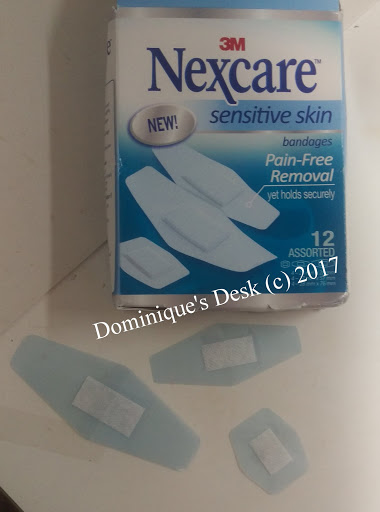
Nexcare Sensitive Skin Bandages
My girl gets scrapes quite often. I normally put a plaster to cover the wound and prevent it from being infected when it occurs.
With the assortment of sizes of plasters one can easily find an appropriate size to cover the wound. Being clinically designed for sensitive and fragile skin it didn’t make her skin turn red when it was removed.

Tiger girl with a bandage on her hand
What we liked about the 3M Nexcare plasters
- Made from Hypoallegenic material
- Latex Free
- Ease to peel out from the packaging. Even Tiger girl could put on the plaster herself without hassle
- Water and moisture resistant.
- Available in three different sizes

Nexcare Adhesive Pads and tape
Recently Tiger girl got some scrapes on her hands when she fell while running around in the park. As you see (from the picture below ) quite a large area of her arm was injured. A single plaster would not be large enough to cover the whole surface area and several plasters would have to be used to prevent an infection from occurring. I decided to use their adhesive pads instead of sticking multiple plasters on her hand.
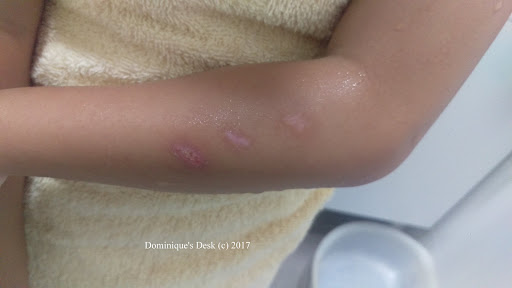
Wounds on Tiger girl’s hand

Placing the 3M Nexcare Sensitive Skin Adhesive Pad on Tiger girl
To ensure that the adhesive pad remained snugly on Tiger girl’s arm I used the tape to reinforce it. This tape is extremely easy to use and you do not even need to use a scissors to tear it off from the roll.
What we liked about the 3M Adhesive Pads and Tape
- 3M™ Sensitive skin silicone adhesive allows the force of removal to be experienced in the adhesive making the removal pain free.
- the tape is easy to be torn and doesn’t cause chafing of the skin.
- Easy to re-position without losing its adhesive properties.
This new range of 3M Nexcare Sensitive Range is not only for kids. It was formulated for individuals with sensitive skin. It is ideal for the very old, very young, those with fragile skin due to chronic illness, skin with lots of hair, skin prone to adverse reactions from adhesives or skin disorders such as eczema.
It certainly receives a thumbs up from me and Tiger girl.
Visit the 3M Nexcare™ Facebook Page to know their latest offers and promotions.
Special Promotion
From now till the 31st of March you can purchase can purchase Nexcare sensitive skin range of with the promo code “NEXCARE5” to get additional 5% discount on top of what is offered on at LAZADA
You may also get 3M Nexcare Sensitive Skin range of products in major Guardian, Watsons and Unity stores.
Disclaimer: This is a sponsored collaboration between Nexcare from 3M and Dominique’s Desk . All opinions are my own.